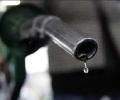
"I am not of the view that diesel price deregulation is inevitable and that is the position taken by petroleum ministry right now. Given the inflationary situation right now, we don't want to do that...," chief economic adviser Kaushik Basu told reporters on the sidelines of a CII event here.

The Strait of Hormuz crisis is impacting lifestyles worldwide, from reduced gold purchases in India to energy conservation in Europe and Japan, as governments urge citizens to adapt to the global energy shock.

Diesel rates had gone up by Rs 12.55 a litre between June 7, when oil firms resumed revising prices in line with cost, and July 25.
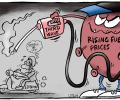
A surge in international oil prices may translate into an increase in the retail selling price of petrol and diesel in India as oil companies face extreme margin squeeze, sources said. Petrol and diesel prices have remained unchanged for 12 days but now the international rate surge is exerting pressure. Current prices of petrol and diesel in the international market are higher by around $4-6 per barrel as compared to average prices during August. However, no increase in retail prices has been affected by oil companies so far, sources said.

Petrol, diesel prices hiked by 40 paise

State-owned fuel retailers, who control 95 per cent of the petrol pump sales, sell diesel at government-fixed rates, which are way lower than the cost of production.
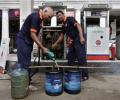
A Monaco-based fuel technology company, FOWE Eco Solutions, claims its patented Cavitech fuel emulsion technology can help industries slash fuel consumption, reduce emissions, and improve equipment performance by using water in fuel.
A Monaco-based fuel technology company, FOWE Eco Solutions, claims its patented Cavitech fuel emulsion technology can help industries slash fuel consumption, reduce emissions, and improve equipment performance by using water.
A Monaco-based fuel technology company, FOWE Eco Solutions, claims its patented Cavitech fuel emulsion technology can help India reduce fuel consumption, emissions, and improve equipment performance by using water in a fuel-oil-water emulsion.

The government has no immediate plans to raise petrol and diesel prices even though raw material costs have surged to their highest level this year, Petroleum Secretary R S Pandey said on Thursday.
Reliance industries on Monday increased diesel prices by Rs 2 per litre.
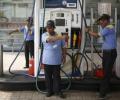
The cumulative increase since the oil companies started the cycle on June 7 now totals to Rs 9.17 for petrol and Rs 11.14 for diesel.
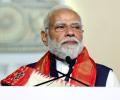
Congress leader Rahul Gandhi has criticised Prime Minister Narendra Modi's call for citizens to make economic sacrifices in response to the West Asia conflict, calling it 'evidence of failure'. Gandhi accused Modi of shifting responsibility onto the public and being incapable of running the country.

The three companies in separate presentations to the Kirit Parikh Committee on fuel pricing suggested immediate freeing of petrol and diesel prices from government control.

Diesel is currently sold at a loss of over Rs 10.80 per litre.
State-run oil firms have sought a Rs 1.50 a litre increase in diesel prices to cover for the rising crude prices, but the government is unlikely to concede to their demand.
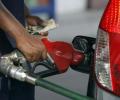
Petrol and diesel prices, which have been on a freeze for the past four months in view of assembly elections in states like Uttar Pradesh, need to be increased by over Rs 12 per litre by March 16 for fuel retailers to break even. International crude oil prices shot above $120 a barrel for the first time in nine years on Thursday before retreating a little to $111 on Friday, but the gulf between cost and retail rates has only widened. With international oil prices - on which domestic fuel retails are directly benchmarked - spiking in the last two months, state-owned fuel retailers "need a massive price hike of Rs 12.1 per litre on or before March 16, 2022, just to breakeven and a price hike of Rs 15.1 is required" after including margins for oil firms, ICICI Securities said in a report.
The price of diesel in Delhi will be hiked by 57 paise.

Congress leader Rahul Gandhi criticised Prime Minister Narendra Modi for gifting 'Melody' toffees to Italian Premier Giorgia Meloni, calling it a 'gimmick' while India faces an 'economic storm'. He accused Modi of prioritising public relations over addressing the struggles of farmers, labourers, and youth, a sentiment echoed by other Congress leaders.
The government has allowed oil companies to raise diesel price by 50 paise a litre per month; bulk users to be charged market price.

Calling such reports baseless, Finance Minister Nirmala Sitharaman said there was no such move under consideration.

The closure of the Strait of Hormuz has disrupted some 20 per cent of the global flows but even if it opens, damages to production facilities in the region will take time to repair, points out Sunita Narain.

If you value space, low running costs and lack of features don't bother you, only then look at this Vinfast.
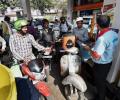
In 13 hikes, petrol price has gone up by Rs 7.11 per litre and diesel by Rs 7.67 a litre.

'Markets never fully lose hope. But an important shift could come if the Strait remains closed -- moving from high prices to no prices.'

The Indian government has waived customs duty on critical petrochemical products until June 30 to ensure supply stability and provide relief to consumers amid disruptions caused by the crisis in West Asia.
The monthly hike in price came after several rounds discussions that the new Oil Minister Dharmendra Pradhan held with state-owned oil firms on continuing with the reform initiated by the United Progressive Alliance government.
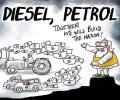
Union Petroleum and Natural Gas Minister Hardeep Singh Puri on Monday said India is the only country where rates of petrol and diesel have come down between November 2021 and April 2024. Replying to various queries during Question Hour in Rajya Sabha, the minister also informed that the government is encouraging dialogue between Oil Marketing Companies (OMCs) and dealers regarding margins for the latter. Puri noted that petrol and diesel were deregulated during the UPA government.
India has asked bulk buyers to pay market rates for diesel since last January and has also been raising the price of subsidised diesel in small amounts every month in an effort to cut its ballooning fuel subsidies.
Petrol and diesel prices were on Wednesday hiked in seven states like West Bengal and Maharastra and that of domestic LPG in six states as state-owned oil firms recalibrated rates to reflect changes in local levies.

Even if there is an early agreement on a cessation of hostilities in West Asia, the price shock will not go away easily, points out A K Bhattacharya.
Raise the price of diesel and restrict supply of subsidised LPG cylinder in a year to four per family, Prime Minister's Economic Advisory Panel suggested on Friday.

One litre of petrol now costs Rs 64.76 while the diesel price is Rs 54.70 a litre in Delhi

Moody's statement comes on a day when opposition parties are observing nation-wide strike to protest against the price hike and government's move to operationalise its decision on allowing foreign direct investment in multi-brand retail.
With vast disparity in fuel prices, the demand for diesel cars had reached upto 85 per cent and petrol cars had come down to 15 per cent, which otherwise usually remained at 50:50 per cent levels in India.

The Indian government has doubled the daily quota of market-priced 5-kg LPG cylinders for migrant workers to ensure stable fuel supplies amidst global disruptions. This move prioritises household cooking gas and addresses the needs of migrant workers who often lack regular connections.
Petrol and diesel prices were on Tuesday hiked by 80 paise a litre while domestic cooking gas prices were increased by Rs 50 per cylinder, ending an over four-and-half month election-related hiatus in rate revision, sources said. Petrol in Delhi will now cost Rs 96.21 per litre as against Rs 95.41 previously while diesel has gone up from Rs 86.67 per litre to Rs 87.47. Simultaneously, the price of a non-subsidised LPG cylinder has been increased to Rs 949.50 for each 14.2-kg bottle in the national capital.
State-owned oil companies are losing about Rs 4 per litre on petrol, industry officials said.
Prime Minister Narendra Modi has urged for restraint in the use of petro products due to the West Asia crisis, emphasising the need to save foreign exchange and reduce the impact of war. He also highlighted India's progress in solar power and ethanol blending, while assuring support to Telangana's development.
